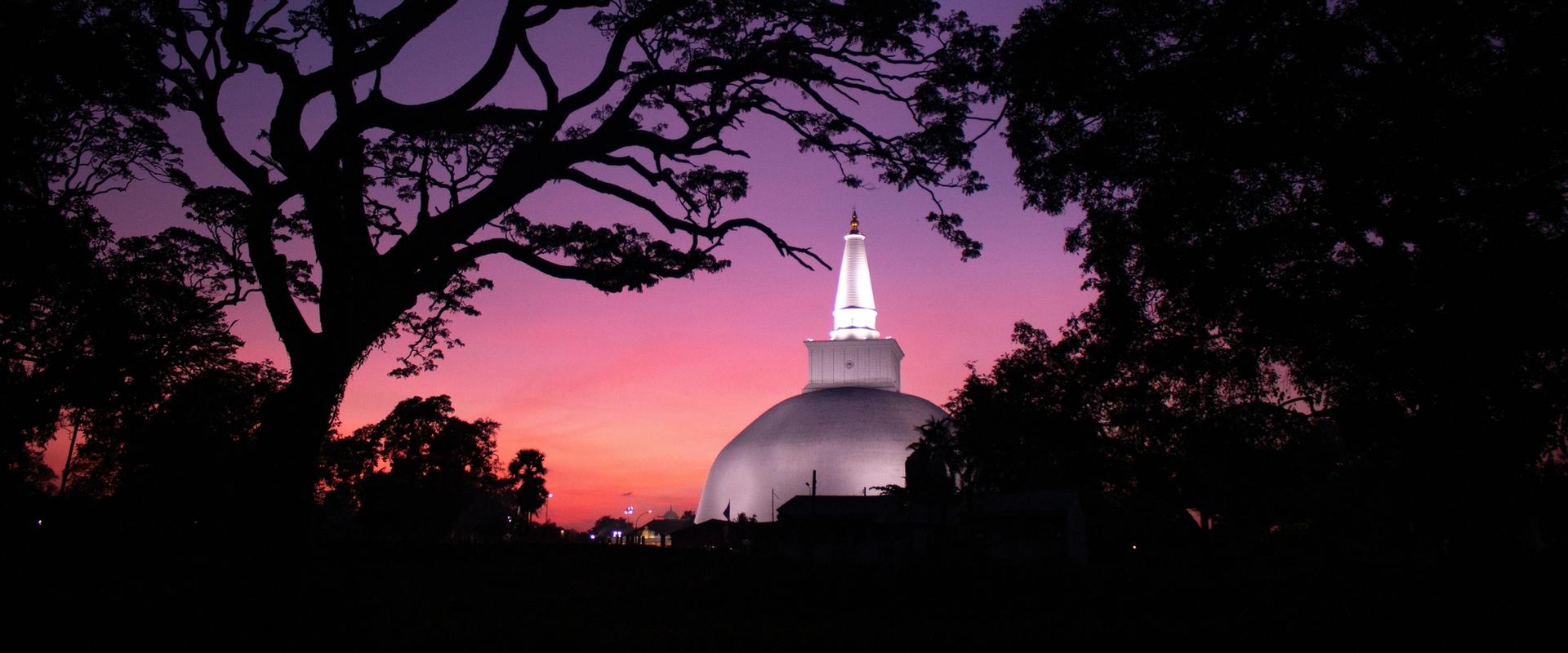
Anuradhapura
Walk among 2,000 year old stupas, stand before the world’s oldest recorded tree, and explore Sri Lanka’s first great capital in Anuradhapura.
Location
View on Google MapsAnuradhapura Travel Guide 2026: Sri Lanka’s Ancient Sacred City
Anuradhapura does not try to impress you with noise. It wins you over with scale, silence, and time.
You walk past brick walls that kings built 2,000 years ago. You stand in front of massive white stupas that still draw thousands of pilgrims each day. You see monks in saffron robes move quietly through temple courtyards. This city shaped Sri Lanka’s identity. And you feel it.
If you plan a trip in 2026, here’s what you need to know.
Why Anuradhapura Matters
Anuradhapura served as Sri Lanka’s first great capital for over 1,300 years, from the 4th century BCE to the 11th century CE. Kings ruled from here. Engineers built advanced irrigation systems. Monks preserved Buddhist teachings that still define the country today.
Today, the ancient city sits inside the Sacred City of Anuradhapura, a UNESCO World Heritage Site.
The city remains one of Sri Lanka’s most important religious destinations. In 2024, Sri Lanka welcomed over 1.5 million international visitors as tourism rebounded strongly after economic instability. Pilgrimage traffic to Anuradhapura increased steadily in 2025, especially during major Buddhist festivals such as Poson Poya.
Dr. Senerath Disanayake, a Sri Lankan archaeologist, once said:
“Anuradhapura represents the foundation of Sinhala Buddhist civilization. It is not just ruins. It is a living sacred landscape.”
That sums it up. This is not a museum. It is active, spiritual, and alive.
A Brief History You Should Know
The Rise of a Kingdom
King Pandukabhaya founded Anuradhapura in the 4th century BCE. The city grew into a powerful capital. Later rulers expanded it into a vast urban center with monasteries, palaces, and reservoirs.
Under King Devanampiya Tissa, Buddhism arrived in Sri Lanka in the 3rd century BCE. That changed everything. The city became a major center of Theravada Buddhism.
The Sacred Tree
One of the most important events happened in 288 BCE. A sapling from the Bodhi tree in India arrived from Bodh Gaya. They planted it in Anuradhapura.
That tree still stands today as the Sri Maha Bodhi.
Decline and Rediscovery
South Indian invasions weakened the kingdom in the 10th and 11th centuries. Rulers shifted the capital to Polonnaruwa. Jungle slowly covered the city.
British colonial officers “rediscovered” the ruins in the 19th century. Archaeologists began systematic restoration. Today, the site covers over 40 square kilometers.
Top Places You Must See
You need at least two full days. Three is better. Rent a bicycle or hire a tuk tuk. The ruins spread out.
Sri Maha Bodhi
This is the oldest documented tree in the world with a known planting date. Pilgrims line up daily to offer flowers. Security remains tight because of its sacred status.
You must dress modestly. Cover your shoulders and knees. Remove your shoes.
Come early morning. The light is soft. The crowds stay manageable.
Ruwanwelisaya
This massive white stupa dominates the skyline. King Dutugemunu built it in the 2nd century BCE. It rises about 103 meters.
Walk around it slowly. Watch local families pray together. Visit at sunset when the white dome glows.
Jetavanaramaya
This brick giant once stood as one of the tallest structures in the ancient world at over 120 meters. Today it still towers at around 71 meters.
Engineers estimate it contains over 90 million bricks. Imagine building that without modern machinery.
Abhayagiri Monastery
This complex once housed thousands of monks. It served as a major center of learning. You see stone carvings, moonstones, and large Buddha statues scattered across the grounds.
Walk slowly. The area feels calm and less crowded than Ruwanwelisaya.
Isurumuniya
This smaller rock temple sits by a peaceful pond. Don’t skip it. The famous “Isurumuniya Lovers” stone carving draws attention for its detailed ancient artistry.
Engineering and Urban Planning That Still Impresses
Anuradhapura was not only religious. It was practical and advanced.
Massive Reservoirs
The city relied on giant man made tanks called “wewa.” Kings built them to manage monsoon rains.
Tissa Wewa and Basawakkulama still function today. These reservoirs helped turn dry land into productive farmland.
Modern hydrologists study these systems. They show how ancient engineers understood water management in a tropical climate.
In 2025, Sri Lanka’s tourism board highlighted Anuradhapura’s irrigation system as one of Asia’s earliest examples of sustainable water engineering.
Planned City Layout
Archaeological studies show clear zoning. Monasteries occupied one area. Royal complexes stood in another. Reservoirs linked everything together.
This was not random growth. It was deliberate urban planning.
Interesting Facts You Didn’t Expect
- Anuradhapura covers a larger area than many modern cities in Sri Lanka.
- Jetavanaramaya ranked among the tallest structures in the world in the 3rd century.
- The Sri Maha Bodhi has survived invasions, colonialism, and civil war.
- Archaeologists continue to uncover new structures. Excavations expanded in 2024 and 2025 under Sri Lanka’s Department of Archaeology.
- The city played a key role in spreading Theravada Buddhism to Southeast Asia.
Professor Sudharshan Seneviratne once noted:
“Anuradhapura shows how religion, politics, and engineering worked together to build a civilization.”
That balance explains its endurance.
Practical Travel Tips for 2026
You want your trip to run smoothly. Here’s what works.
Tickets and Entry
Foreign visitor tickets to the archaeological zone cost around USD 25 to 30 in 2025. Prices can change, so check the official Sri Lanka tourism site before you go.
Buy tickets at the official counter. Keep them with you. Guards check them.
Getting There
You can reach Anuradhapura from Colombo in about 4 to 5 hours by car. Trains also run regularly.
Many travelers combine Anuradhapura with:
- •Sigiriya
- •Polonnaruwa
- •Dambulla
This forms the Cultural Triangle.
Best Time to Visit
Visit between December and April for dry weather. May to September brings heat and occasional rain.
Temperatures often exceed 30°C. Start early. Take water. Wear a hat.
Dress Code
You must dress modestly at religious sites. Remove shoes before entering sacred areas. Bring socks. The ground gets hot.
Getting Around
Rent a bicycle for a full day. It costs little and gives you freedom. If you prefer comfort, hire a tuk tuk driver for several hours.
Agree on a price upfront. Keep it simple.
Stay Options
You find guesthouses, mid range hotels, and a few upscale eco resorts. Tourism infrastructure improved steadily in 2024 and 2025 as Sri Lanka’s hospitality sector recovered.
Book ahead during full moon days and festival periods.
Responsible Travel in a Sacred City
This is not just a sightseeing stop.
Respect pilgrims. Avoid loud behavior. Do not pose for photos with your back to Buddha statues. Authorities fine tourists for disrespectful behavior.
Carry reusable water bottles. Reduce plastic use. Sri Lanka increased environmental campaigns in heritage zones in 2025.
You play a role in preserving this place.
How Anuradhapura Fits Into Your Sri Lanka Itinerary
If you only want beaches, skip it. But if you care about history, religion, or ancient engineering, make it a priority.
Pair Anuradhapura with:
- •Wilpattu National Park for wildlife
- •Sigiriya for dramatic rock fortress views
- •Polonnaruwa for later medieval ruins
Give Anuradhapura time. Don’t rush through in half a day. That approach fails. Stay at least two nights.
FAQs
How many days do you need in Anuradhapura?
You need two full days to see major sites properly. Three days allows a slower pace.
Is Anuradhapura worth visiting in 2026?
Yes. Tourism infrastructure improved, restoration projects continue, and the site remains one of Asia’s most significant ancient cities.
Can you explore Anuradhapura without a guide?
Yes. You can rent a bike and explore independently. A guide adds historical depth but is not required.
What should you wear in Anuradhapura?
Wear clothing that covers shoulders and knees. Remove shoes at religious sites.
Is Anuradhapura safe for tourists?
Yes. Sri Lanka stabilized politically and economically after 2023. Tourist police operate in heritage areas.
What is the best time of day to visit the stupas?
Go early morning or late afternoon to avoid heat and crowds.
Top Sources
Ready to Explore More of Sri Lanka?
Discover more incredible destinations and plan your perfect trip